
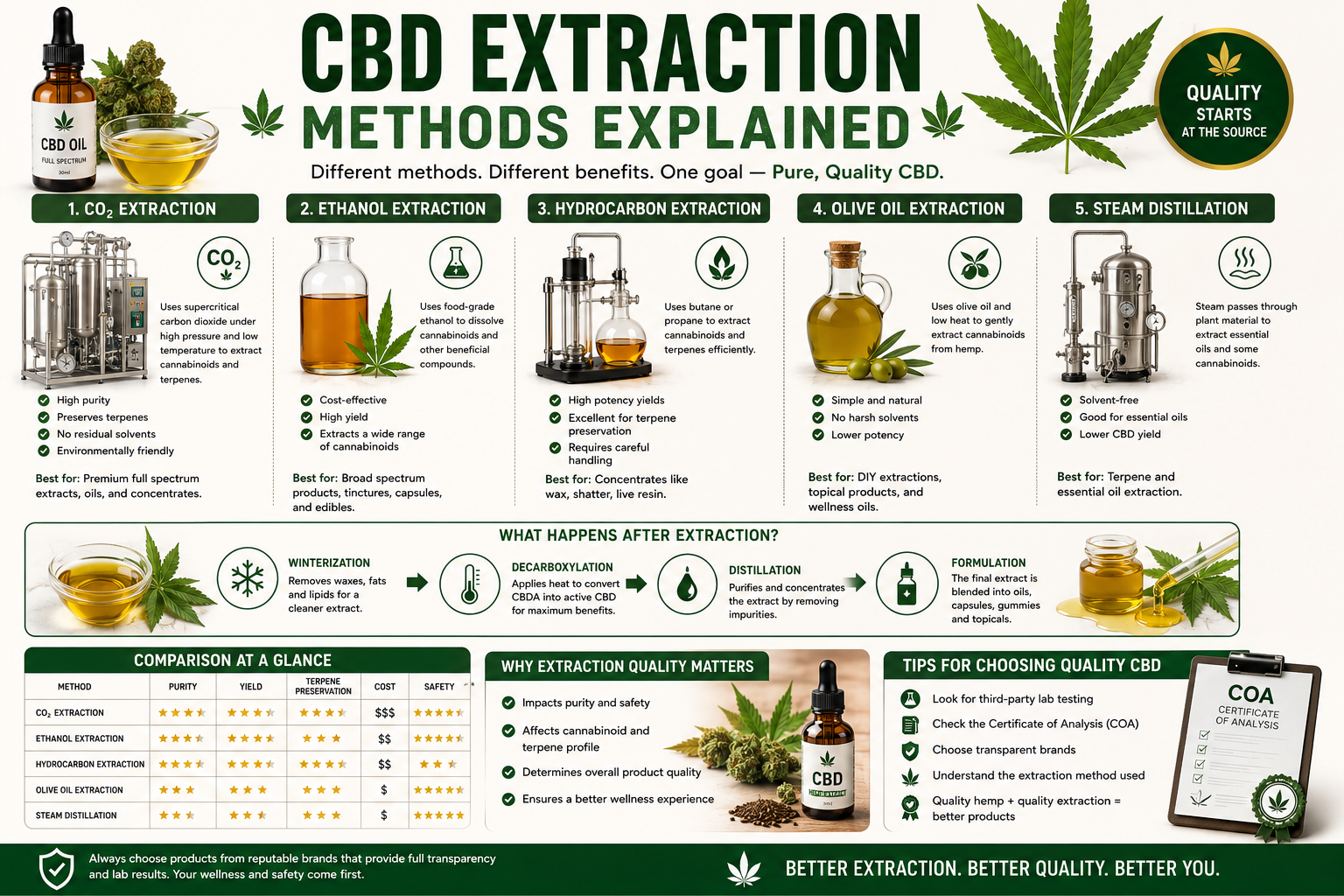
CBD Extraction Methods Explained
CBD Extraction Methods Explained
As the popularity of hemp-derived wellness products continues to grow, consumers are becoming more interested in understanding how CBD is produced. One of the most important factors that affects the quality of a CBD product is the extraction method used to obtain cannabidiol (CBD) from the hemp plant.
This CBD Extraction Methods Explained guide covers the most common extraction techniques, how each method works, their advantages and limitations, and why extraction quality matters when choosing premium CBD products. Whether you’re researching CBD oils, gummies, capsules, or topicals, understanding extraction methods can help you make more informed decisions.
What Is CBD Extraction?
CBD extraction is the process of separating cannabidiol and other naturally occurring compounds from industrial hemp. The goal is to obtain a concentrated hemp extract while preserving beneficial cannabinoids and plant compounds.
A quality extraction process aims to retain:
- Cannabidiol (CBD)
- Minor cannabinoids
- Terpenes
- Flavonoids
- Other naturally occurring hemp compounds
Understanding this process is the foundation of CBD Extraction Methods Explained.
Why Extraction Methods Matter
The extraction method used can influence several characteristics of the final product, including:
- Purity
- Cannabinoid profile
- Terpene preservation
- Flavor and aroma
- Product consistency
- Manufacturing efficiency
High-quality extraction is one component of producing transparent, well-characterized CBD products. Other important factors include third-party laboratory testing, ingredient quality, and manufacturing standards.
How Hemp Is Prepared Before Extraction
Before extraction begins, hemp plants generally go through several preparation stages:
Harvesting
Mature hemp plants are harvested when cannabinoid production reaches the desired stage.
Drying
The harvested material is dried to reduce moisture content.
Grinding
The dried hemp is milled into smaller particles to increase the surface area for extraction.
Storage
Prepared hemp is stored under appropriate conditions until processing.
Proper preparation supports a more consistent extraction process.
CO₂ Extraction
One of the most widely used commercial techniques discussed in CBD Extraction Methods Explained is supercritical carbon dioxide (CO₂) extraction.
This method uses carbon dioxide under controlled temperature and pressure conditions. In its supercritical state, CO₂ behaves with properties of both a liquid and a gas, allowing it to dissolve and separate compounds from hemp.
Advantages
- Highly selective extraction
- Preserves many cannabinoids and terpenes
- Leaves no residual solvent in the finished extract when properly performed
- Widely used in commercial production
- CBD Extraction Methods Explained
Considerations
- Requires specialized equipment
- Higher production costs
- Technical expertise is needed
CO₂ extraction is often chosen for premium hemp extracts because of its precision and consistency.
Ethanol Extraction
Another common technique in CBD Extraction Methods Explained is ethanol extraction.
Food-grade ethanol is used to dissolve cannabinoids and other plant compounds from hemp material. The ethanol is then removed during later processing steps.
Advantages
- Efficient for large-scale production
- Extracts a broad range of cannabinoids
- Cost-effective for manufacturers
Considerations
- Can extract chlorophyll if not carefully controlled
- Requires additional purification steps
- Processing conditions influence the final composition
Many commercial CBD products use ethanol extraction followed by refinement.
Hydrocarbon Extraction
Hydrocarbon extraction uses solvents such as butane or propane to extract cannabinoids and aromatic compounds.
Advantages
- Effective at preserving terpenes
- Can produce highly concentrated extracts
Considerations
- Requires careful solvent removal
- Specialized equipment and safety procedures are essential
- Finished products should be tested for residual solvents
Consumers should look for products that provide third-party testing if this extraction method is used.
Olive Oil Extraction
Olive oil extraction is one of the oldest methods of obtaining hemp extracts.
The process involves gently heating hemp in olive oil, allowing cannabinoids to dissolve into the oil.
Advantages
- Simple process
- Uses food-grade ingredients
- Suitable for small-scale preparation
Considerations
- Shorter shelf life
- Lower cannabinoid concentration
- Less common in commercial manufacturing
Olive oil extraction is not widely used for large-scale CBD production.
Steam Distillation
Steam distillation is more commonly associated with essential oils but can also be used for hemp extraction.
Steam passes through plant material, carrying volatile compounds that are later condensed.
Advantages
- Solvent-free process
- Traditional extraction technique
Considerations
- Lower CBD yield
- Less efficient for commercial CBD extraction
- Heat may affect some compounds
Because of these limitations, steam distillation is less commonly used for CBD production.
Lipid Infusion Extraction
Lipid infusion uses fats or oils to absorb cannabinoids from hemp.
Common carrier oils include:
- Coconut oil
- MCT oil
- Olive oil
This method is generally associated with small-scale production rather than commercial manufacturing.
Winterization
After extraction, many manufacturers perform winterization.
Winterization removes unwanted substances such as:
- Plant waxes
- Lipids
- Fats
This process helps produce a cleaner and more refined extract.
Decarboxylation
Another important stage in CBD Extraction Methods Explained is decarboxylation.
Heating hemp converts cannabinoid acids, such as CBDA, into CBD.
This step is commonly used in commercial processing to achieve the desired cannabinoid profile.
Distillation
Following extraction and refinement, manufacturers may distill hemp extracts.
Distillation can:
- Increase cannabinoid concentration
- Improve product consistency
- Remove additional impurities
Distilled extracts are often used in oils, capsules, and gummies.
CBD Isolate Production
CBD isolate is produced through additional purification after extraction.
The result is highly refined cannabidiol intended to contain CBD without the broader range of cannabinoids found in full-spectrum or broad-spectrum extracts.
CBD isolate is commonly used in:
- Oils
- Gummies
- Capsules
- Topicals
Broad Spectrum Extraction
Broad-spectrum products are formulated to retain CBD and selected additional hemp-derived compounds while being processed to remove THC.
Broad-spectrum extracts may include:
- CBD
- Minor cannabinoids
- Terpenes
- Flavonoids
The exact composition depends on the manufacturer’s process.
Full Spectrum Extraction
Full-spectrum extracts preserve a broader range of naturally occurring hemp compounds.
Depending on the formulation and jurisdiction, these products may contain THC.
Consumers should review batch-specific laboratory reports to understand the cannabinoid profile of a particular product.
Importance of Third-Party Laboratory Testing
Extraction is only one part of product quality. Independent laboratory testing provides additional information about the finished product.
A Certificate of Analysis (COA) may include:
- CBD concentration
- Cannabinoid profile
- THC results
- Residual solvent testing
- Heavy metal screening
- Pesticide testing
- Microbial analysis
Reviewing a COA helps consumers understand the composition of a product beyond marketing claims.
How to Choose Quality CBD Products
When evaluating CBD products, consider:
Transparent Labeling
Look for:
- CBD content
- Extract type
- Ingredient list
- Batch number
Third-Party Testing
Choose products that provide accessible Certificates of Analysis.
Manufacturing Standards
Reputable manufacturers clearly explain their production methods and quality controls.
Realistic Marketing
Be cautious of products claiming to cure diseases or guarantee specific health outcomes.
Common Misconceptions About Extraction
“CO₂ Extraction Is Always Better”
CO₂ extraction is widely respected, but product quality also depends on hemp source, manufacturing practices, and testing.
“Natural Means Better”
A natural extraction method does not automatically produce a superior product.
“All CBD Oils Are Extracted the Same Way”
Different manufacturers use different extraction and refinement techniques.
“Higher Price Means Better Extraction”
Price alone does not determine quality. Transparency and laboratory testing are better indicators.
Frequently Asked Questions
What is the best CBD extraction method?
Different methods have different advantages. CO₂ and ethanol extraction are among the most common commercial techniques.
Why is CO₂ extraction popular?
It offers precise extraction and is widely used in commercial CBD manufacturing.
Does extraction affect CBD quality?
Yes. Extraction influences the cannabinoid profile, purity, and overall composition of the final extract.
Why is third-party testing important?
Independent laboratory testing helps verify cannabinoid content and provides additional quality information.
What is winterization?
Winterization is a refining process that removes waxes, fats, and lipids from hemp extracts.
Final Thoughts
Understanding CBD Extraction Methods Explained gives consumers valuable insight into how hemp-derived CBD products are made. From CO₂ extraction and ethanol extraction to hydrocarbon methods, olive oil extraction, and refinement processes such as winterization and distillation, each technique contributes to the characteristics of the finished product.
When evaluating CBD oils, gummies, capsules, or topicals, extraction method is only one factor to consider. Consumers should also review ingredient transparency, batch-specific Certificates of Analysis, third-party laboratory testing, and manufacturing standards.
By learning CBD Extraction Methods Explained, you’ll be better equipped to compare products, interpret quality claims, and make informed decisions when exploring premium hemp-derived wellness products.