
CBD Oil Dosage Guide
CBD Oil Dosage Guide: How to Understand CBD Serving Sizes
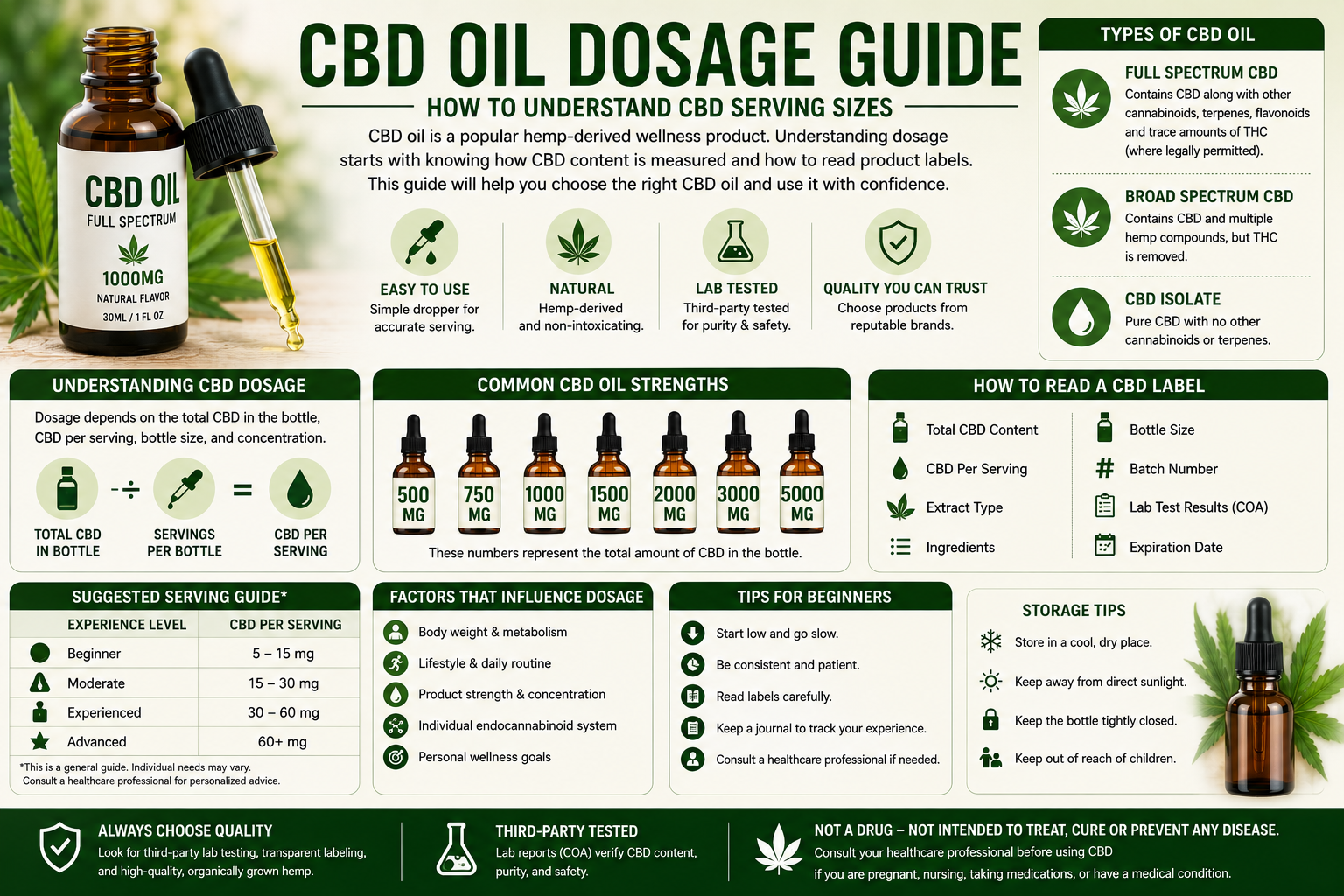
CBD oil has become one of the most popular hemp-derived wellness products worldwide. Whether you’re new to CBD or looking to better understand product labels, this CBD Oil Dosage Guide will help explain how CBD serving sizes work, what influences CBD potency, and how to choose a quality product. Understanding CBD dosage starts with learning how manufacturers measure CBD content and how to read product labels accurately.
What Is CBD Oil?
CBD oil is a hemp-derived product containing cannabidiol (CBD), a naturally occurring cannabinoid found in hemp plants. Unlike THC, CBD does not produce intoxicating effects. CBD oils are available in several formulations, including Full Spectrum, Broad Spectrum, and CBD Isolate.
Products are commonly sold as tinctures with a dropper, making it easier to measure consistent serving sizes.
Understanding CBD Dosage
When discussing a CBD Oil Dosage Guide, it’s important to distinguish between:
- Total CBD in the bottle
- CBD per serving
- Bottle size
- Product concentration
For example, two bottles may both contain 30 ml of liquid, but one may contain 500 mg of CBD while another contains 2000 mg. Although the bottle size is the same, the concentration differs significantly.
Common CBD Oil Strengths
Many manufacturers offer CBD oils in several strengths, including:
- 500 mg
- 750 mg
- 1000 mg
- 1500 mg
- 2000 mg
- 3000 mg
- 5000 mg
These values represent the total amount of CBD contained in the bottle.
Factors That Influence CBD Serving Sizes
There is no single serving size that is appropriate for everyone. Product labels, concentration, and individual circumstances all influence how consumers interpret serving information. Reading the manufacturer’s instructions and consulting a qualified healthcare professional can help determine an appropriate approach for your needs. CBD Oil Dosage Guide
Full Spectrum, Broad Spectrum, and CBD Isolate
Full Spectrum CBD
Contains CBD together with naturally occurring cannabinoids, terpenes, flavonoids, and, where legally permitted, trace amounts of THC.
Broad Spectrum CBD
Contains CBD and multiple hemp compounds but is generally processed to remove THC.
CBD Isolate
Contains purified CBD only, without additional cannabinoids or terpenes.
Choosing the right extract type is just as important as understanding product strength.
How to Read a CBD Label
When comparing products, look for:
- Total CBD content
- Bottle size
- CBD per serving
- Extract type
- Ingredient list
- Batch number
- Expiration date
- Certificate of Analysis (COA)
- CBD Oil Dosage Guide
Transparent labeling makes it easier to compare products from different brands.
Why Third-Party Lab Testing Matters
High-quality CBD manufacturers provide independent laboratory reports that verify:
- CBD concentration
- Cannabinoid profile
- Product purity
- Heavy metal screening
- Pesticide screening
- Residual solvent testing
- CBD Oil Dosage Guide
Always choose products with readily available Certificates of Analysis.
Choosing a Quality CBD Product
Before purchasing CBD oil, consider:
- Hemp source
- Extraction method
- Third-party testing
- Manufacturing standards
- Brand transparency
- Customer support
- Clear product labeling
- CBD Oil Dosage Guide
These factors can help you compare products with greater confidence.
Storage Tips
To help maintain product quality:
- Store in a cool, dry place.
- Avoid direct sunlight.
- Keep the bottle tightly closed.
- Follow the manufacturer’s storage instructions.
- CBD Oil Dosage Guide
Frequently Asked Questions
Is a higher-strength CBD oil always better?
Not necessarily. Higher-strength products simply contain more CBD per serving. The right choice depends on the product, your preferences, and guidance from a healthcare professional.
What does “CBD per serving” mean?
It refers to the amount of CBD contained in the manufacturer’s recommended serving size.
Why is third-party testing important?
Independent testing helps verify the CBD content and confirms that the product meets quality standards.
Which extract type should I choose?
Full Spectrum, Broad Spectrum, and CBD Isolate each have different characteristics. Your choice depends on your preferences, product goals, and local regulations.
Final Thoughts
This CBD Oil Dosage Guide is designed to help consumers understand how CBD products are labeled and how serving sizes and concentrations differ between products. By reviewing the total CBD content, CBD per serving, extract type, and third-party laboratory testing, you can make informed comparisons when choosing a hemp-derived CBD oil. Always read product labels carefully and consult a qualified healthcare professional before beginning any new supplement, especially if you are pregnant, nursing, have a medical condition, or take prescription medications.