
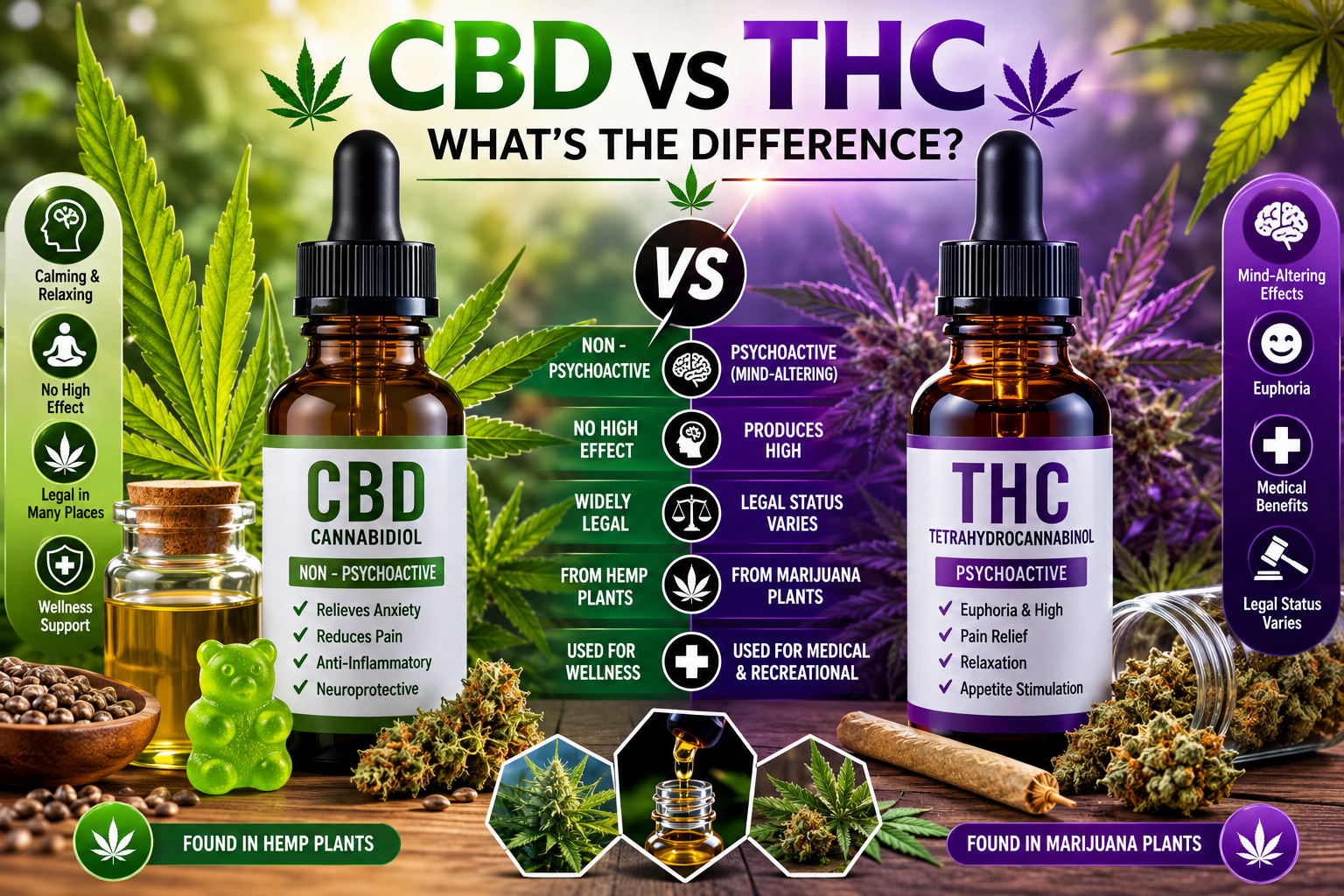
CBD vs THC: What’s the Difference?
CBD vs THC: What’s the Difference?
As interest in cannabis and hemp-derived products continues to grow around the world, two compounds are discussed more than any others: cannabidiol (CBD) and tetrahydrocannabinol (THC). Although both are naturally occurring cannabinoids found in the Cannabis sativa plant, they differ in their chemical properties, legal status in many jurisdictions, and how they interact with the human body.
This guide explains the key differences between CBD and THC, their sources, common product types, and important considerations for anyone researching these compounds. CBD vs THC: What’s the Difference?
What Are Cannabinoids?
Cannabinoids are naturally occurring compounds found in cannabis plants. Scientists have identified more than 100 different cannabinoids, each with its own chemical structure and characteristics.
Among these, CBD and THC are the two most widely studied and recognized. They are present in varying amounts depending on the variety of cannabis plant and how it is cultivated.
What Is CBD?
CBD, short for cannabidiol, is a cannabinoid commonly found in hemp and cannabis plants. It has become widely recognized through research, consumer education, and the growing availability of hemp-derived products in many parts of the world.
Unlike THC, CBD is not generally associated with intoxicating effects. This distinction has contributed to increased scientific interest and public awareness.
CBD products are available in various forms, including:
- Oils
- Capsules
- Gummies
- Topical creams
- Skincare products
- Beverages
The availability of these products depends on local laws and regulations.
What Is THC?
THC, or tetrahydrocannabinol, is another naturally occurring cannabinoid found in cannabis plants. It is commonly associated with the intoxicating effects of cannabis.
THC has been studied extensively by researchers and is regulated differently across countries. In some places, products containing THC may be permitted under medical or recreational cannabis programs, while in others they remain prohibited.
The legal status of THC products varies significantly worldwide.
CBD vs THC: Key Differences
Although CBD and THC come from the same plant family, they differ in several important ways.
Chemical Structure
CBD and THC have similar molecular formulas but different atomic arrangements. This small structural difference affects how each compound interacts with receptors in the body.
Intoxicating Effects
One of the most significant differences is that THC is generally associated with intoxicating effects, whereas CBD is not generally associated with those effects. CBD vs THC: What’s the Difference?
Plant Sources
CBD is commonly extracted from hemp varieties, while THC is typically found in higher concentrations in certain cannabis varieties.
Product Availability
CBD and THC products are subject to different regulations depending on the country or region. Consumers should always check applicable local laws before purchasing or using any cannabinoid-containing product. CBD vs THC: What’s the Difference?
How Do CBD and THC Interact with the Body?
Researchers study CBD and THC because they interact differently with the body’s endocannabinoid system, a complex biological signaling network involved in many physiological processes.
While both compounds interact with this system, they do so in different ways due to their unique chemical structures. Scientists continue to investigate these interactions and their implications through ongoing research.
Common Product Types
CBD and THC can be found in a variety of regulated product categories depending on local laws.
These may include:
- Oils
- Capsules
- Topical products
- Edible products
- Cosmetic products
- Research formulations
- CBD vs THC: What’s the Difference?
Product availability varies by jurisdiction.
Why Is There So Much Interest?
Interest in cannabinoids has grown due to several factors:
- Increased scientific research
- Expanding consumer education
- Growing global awareness
- Advances in cultivation and extraction technologies
- Ongoing regulatory developments
- CBD vs THC: What’s the Difference?
As knowledge expands, consumers increasingly seek reliable educational resources to better understand these compounds.
Understanding Product Labels
When researching cannabinoid products, consumers should review product information carefully.
Important details may include:
- Ingredient list
- Cannabinoid content
- Batch number
- Manufacturer information
- Independent laboratory testing
- Storage instructions
- CBD vs THC: What’s the Difference?
Transparent labeling helps consumers make informed decisions.
The Importance of Third-Party Testing
Independent laboratory testing is an important quality-control measure used by many manufacturers.
Testing may verify:
- Cannabinoid profile
- Product consistency
- Manufacturing quality
- Ingredient accuracy
- CBD vs THC: What’s the Difference?
Consumers often look for products accompanied by certificates of analysis (COAs) from accredited laboratories.
Legal Considerations
The legal status of CBD and THC differs substantially across the world.
Some countries permit certain cannabinoid products under specific regulatory frameworks, while others maintain strict restrictions. Travelers and consumers should never assume that products legal in one jurisdiction are permitted in another.
Always consult official government guidance regarding local laws.
Frequently Asked Questions
Are CBD and THC the same?
No. Although both are cannabinoids found in cannabis plants, they have different chemical structures and characteristics.
Can hemp contain cannabinoids?
Yes. Hemp naturally contains cannabinoids, including CBD. The amount and type of cannabinoids present depend on the plant variety and applicable regulations.
Why are laws different around the world?
Cannabinoid regulations are determined by each country’s legal and regulatory framework. These laws continue to evolve in some jurisdictions.
Conclusion
Understanding the differences between CBD and THC is an important first step for anyone researching hemp and cannabis-related topics. While both compounds originate from the same plant family, they differ in their chemical structure, regulatory treatment, and characteristics. CBD vs THC: What’s the Difference?
As scientific knowledge continues to develop, staying informed through reliable educational resources and official regulatory guidance remains the best way to understand cannabinoids and their place within the broader field of plant science and wellness research. CBD vs THC: What’s the Difference?