
How Hemp Is Cultivated Around the World
How Hemp Is Cultivated Around the World
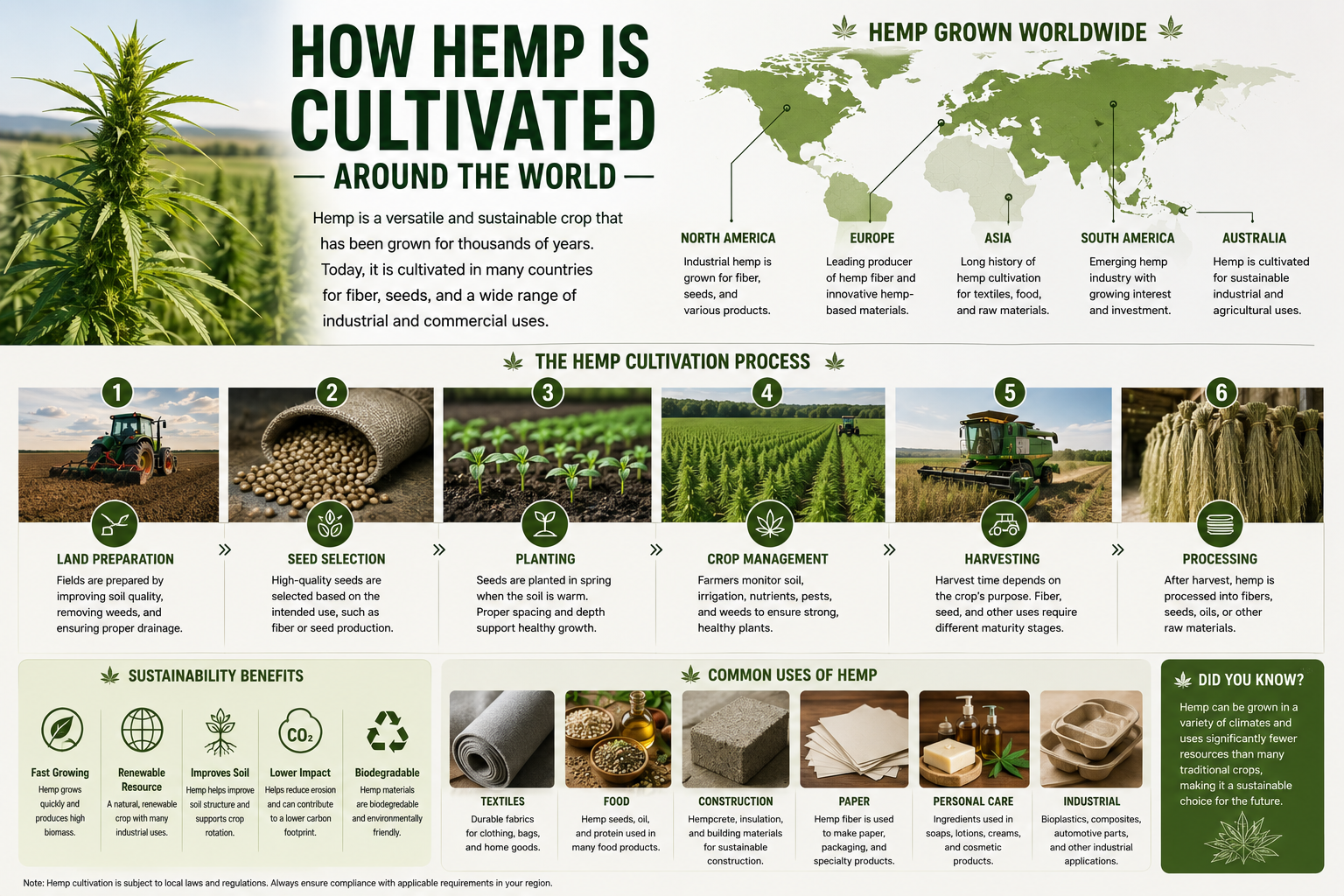
Hemp is one of the oldest cultivated crops in human history and remains an important agricultural resource in many parts of the world. Valued for its versatility, sustainability, and wide range of industrial applications, hemp is grown for fiber, seeds, and other plant-derived materials used in textiles, food, construction, cosmetics, and manufacturing.
As interest in sustainable agriculture continues to grow, many people are curious about how hemp is cultivated around the world. This guide explores the hemp cultivation process, major producing regions, environmental requirements, and the role hemp plays in modern agriculture.
What Is Hemp?
Hemp is a variety of the Cannabis sativa plant that is cultivated primarily for industrial and agricultural purposes. Depending on local laws and regulations, hemp is grown under legal frameworks that specify cultivation requirements and quality standards.
Today, hemp is recognized for its fast growth, renewable nature, and ability to provide raw materials for numerous industries.
A Brief History of Hemp Cultivation
Hemp has been cultivated for thousands of years. Historical evidence suggests that early civilizations in Asia were among the first to grow hemp for rope, textiles, and paper.
Over time, hemp cultivation expanded into Europe, the Middle East, and the Americas. Although production declined in some regions during the twentieth century, interest has increased again in recent decades as countries have explored industrial hemp under regulated agricultural programs.
Ideal Growing Conditions
Hemp thrives in a variety of climates but generally performs best under favorable growing conditions.
Key environmental factors include:
- Well-drained, fertile soil
- Moderate rainfall or irrigation
- Plenty of sunlight
- Good air circulation
- Mild to warm temperatures during the growing season
- How Hemp Is Cultivated Around the World
Healthy soil and proper field preparation contribute to strong plant development and high-quality harvests.
The Hemp Cultivation Process
1. Land Preparation
Farmers prepare fields by improving soil structure, removing weeds, and ensuring proper drainage. Soil testing is often conducted to determine nutrient levels before planting.
2. Seed Selection
Choosing suitable seed varieties depends on the intended agricultural purpose, such as fiber, seed production, or other regulated industrial uses. How Hemp Is Cultivated Around the World
Quality seed selection supports healthy crop establishment and consistent growth.
3. Planting
Hemp seeds are typically planted during the spring after the risk of frost has passed. Plant spacing may vary depending on cultivation objectives.
Proper planting depth and moisture help encourage successful germination.
4. Crop Management
Throughout the growing season, farmers monitor:
- Soil moisture
- Nutrient availability
- Weed competition
- Plant health
- Pest management
- How Hemp Is Cultivated Around the World
Modern cultivation often combines traditional farming practices with precision agriculture technologies.
5. Harvesting
Harvest timing depends on the crop’s intended use. Fiber crops, seed crops, and other production goals may require harvesting at different stages of plant maturity.
Specialized equipment is frequently used to improve harvesting efficiency.
Major Hemp-Producing Regions
Europe
Several European countries cultivate industrial hemp under regulated agricultural programs. Hemp is used in textiles, construction materials, food products, and research.
North America
Industrial hemp cultivation has expanded in parts of North America where legal frameworks permit production. Farmers grow hemp for fiber, seeds, and industrial applications.
Asia
Asia has a long history of hemp cultivation dating back thousands of years. The region continues to contribute to hemp research, manufacturing, and agricultural production.
Australia
Australia has developed regulated hemp industries in several regions, supporting agricultural research and commercial applications.
South America
Interest in hemp cultivation is growing in parts of South America, particularly where climate conditions support agricultural development.
Sustainability Benefits
Hemp is frequently discussed as a sustainable agricultural crop because of several characteristics.
Potential advantages include:
- Rapid growth
- Renewable raw materials
- Soil protection
- Crop rotation opportunities
- Biodegradable fiber production
- How Hemp Is Cultivated Around the World
Environmental outcomes depend on local conditions and farming practices.
Common Uses of Hemp
Modern industries use hemp in many ways.
Textiles
Hemp fibers are woven into durable fabrics for clothing, upholstery, and industrial products.
Food
Hemp seeds are incorporated into oils, protein powders, cereals, and other food products in accordance with local regulations.
Construction
Hemp-based materials are being explored for insulation and other building applications.
Paper
Hemp fibers can be processed into paper and specialty packaging products.
Personal Care
Hemp-derived ingredients may be found in soaps, lotions, shampoos, and cosmetic products.
Challenges in Hemp Farming
Like any agricultural crop, hemp cultivation presents challenges.
Farmers may need to manage:
- Weather variability
- Soil fertility
- Water availability
- Pest control
- Harvest timing
- Market demand
- Regulatory compliance
- How Hemp Is Cultivated Around the World
Successful production depends on careful planning and responsible farm management.
Innovation in Hemp Agriculture
Researchers continue to explore new technologies that improve hemp cultivation.
Areas of innovation include:
- Precision farming
- Sustainable irrigation
- Improved seed varieties
- Soil health management
- Climate adaptation
- Mechanized harvesting
- How Hemp Is Cultivated Around the World
These developments aim to increase efficiency while supporting sustainable agriculture.
The Importance of Regulations
Industrial hemp cultivation is regulated differently around the world. Requirements may include licensing, crop testing, reporting obligations, and quality standards. How Hemp Is Cultivated Around the World
Farmers and businesses should always comply with the laws and regulations that apply in their country or region.
Frequently Asked Questions
Is hemp grown worldwide?
Industrial hemp is cultivated in many countries under legal agricultural frameworks, although regulations vary significantly.
How long does hemp take to grow?
Depending on the variety, climate, and intended use, hemp generally reaches maturity within a few months.
Why is hemp considered versatile?
Nearly every part of the hemp plant can be used in different industries, including textiles, food, construction, paper, and personal care products.
Conclusion
Hemp continues to play an important role in modern agriculture because of its versatility and broad industrial applications. From carefully selecting seeds to harvesting mature crops, hemp cultivation requires thoughtful planning, responsible farming practices, and compliance with local regulations. How Hemp Is Cultivated Around the World
As research and agricultural innovation continue to evolve, hemp is likely to remain an important crop for sustainable manufacturing, renewable materials, and agricultural development around the world. Understanding how hemp is cultivated provides valuable insight into one of the world’s most adaptable and historically significant plants. How Hemp Is Cultivated Around the World