
What Is Hemp? A Beginner’s Guide
What Is Hemp? A Beginner’s Guide
Hemp has been cultivated by humans for thousands of years and remains one of the world’s most versatile plants. Used in industries ranging from textiles and construction to food and personal care products, hemp has gained renewed attention in recent years due to growing interest in sustainable materials and plant-based resources.
If you’re new to the subject, this beginner’s guide explains what hemp is, how it differs from other cannabis plants, its historical significance, common uses, and why it continues to play an important role in modern agriculture and manufacturing.
What Is Hemp?
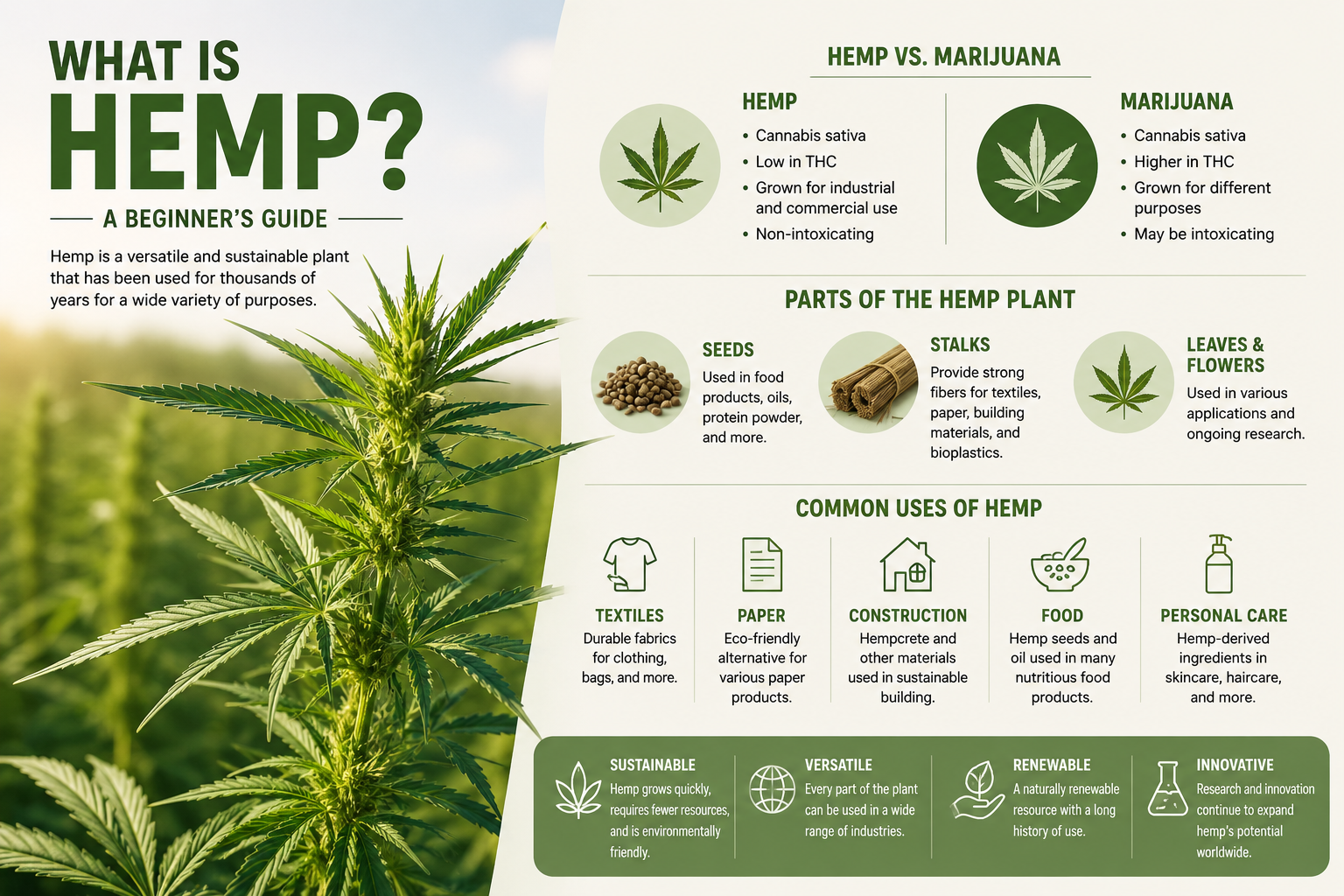
Hemp is a variety of the plant species Cannabis sativa. It is cultivated primarily for industrial, agricultural, and commercial purposes rather than for intoxicating effects.
The plant grows quickly, adapts to a variety of climates, and produces strong natural fibers, nutritious seeds, and a range of compounds that have become the focus of scientific research. Throughout history, hemp has been valued as a renewable crop with many practical applications.
Today, hemp is grown in numerous countries under legal frameworks that regulate its cultivation and processing.
The History of Hemp
Hemp has one of the longest recorded histories of any cultivated plant.
Ancient civilizations used hemp to produce:
- Rope
- Fabric
- Paper
- Sailcloth
- Clothing
- Fishing nets
- What Is Hemp? A Beginner’s Guide
Historical records show that hemp was cultivated in parts of Asia thousands of years ago before spreading to Europe, Africa, and the Americas. Because of its durability and versatility, hemp became an essential agricultural crop in many societies.
Hemp vs. Marijuana
One of the most common misconceptions is that hemp and marijuana are the same.
While both belong to the species Cannabis sativa, they are cultivated and regulated differently. Hemp is generally grown for industrial uses, fiber, seeds, and other non-intoxicating commercial applications, whereas other cannabis varieties may be cultivated for different purposes under varying legal frameworks.
The distinction between hemp and other cannabis varieties is defined differently by the laws of individual countries, so it is important to understand local regulations.
Parts of the Hemp Plant
Every part of the hemp plant can be utilized.
What Is Hemp? A Beginner’s Guide
Seeds
Hemp seeds are rich in nutrients and are commonly used in food products.
They can be processed into:
- Hemp seed oil
- Protein powders
- Flour
- Snacks
- What Is Hemp? A Beginner’s Guide
Stalks
The stalk provides strong natural fibers that are used in:
- Clothing
- Paper
- Building materials
- Rope
- Bioplastics
- What Is Hemp? A Beginner’s Guide
Leaves and Flowers
Leaves and flowers are the focus of ongoing scientific research and are used in various regulated industries depending on local laws.
How Hemp Is Grown
Hemp is known for being a resilient crop.
Farmers typically plant hemp in well-drained soil with access to adequate sunlight and moisture. The crop grows rapidly and usually reaches maturity within a few months.
Because hemp develops deep roots, it can help improve soil structure and reduce erosion. It is also valued in crop rotation systems.
Common Uses of Hemp
Textiles
Hemp fibers produce durable fabrics suitable for clothing, upholstery, and industrial textiles.
Paper
Paper made from hemp fibers has been produced for centuries and remains an area of interest for sustainable manufacturing.
Construction
Hemp-based building materials, such as hempcrete, are being explored as environmentally friendly alternatives for certain construction applications.
Food
Hemp seeds are incorporated into products such as granola, plant-based beverages, protein powders, and cooking oils.
Personal Care
Hemp-derived ingredients are used in a variety of cosmetic and skincare products, including lotions, soaps, shampoos, and moisturizers.
Environmental Benefits
Hemp is often highlighted for its sustainability.
Potential environmental advantages include:
- Fast growth
- Efficient land use
- Reduced soil erosion
- Renewable fiber production
- Biodegradable raw materials
- What Is Hemp? A Beginner’s Guide
Like any agricultural crop, environmental impacts depend on farming practices, climate, and resource management.
Industrial Applications
Modern industries use hemp in a wide range of products, including:
- Automotive components
- Composite materials
- Packaging
- Bioplastics
- Animal bedding
- Gardening products
- Insulation materials
- What Is Hemp? A Beginner’s Guide
Ongoing innovation continues to expand the range of potential applications for hemp.
Research and Innovation
Scientists and engineers continue to explore new uses for hemp in agriculture, manufacturing, materials science, and environmental sustainability.
Research areas include:
- Sustainable textiles
- Renewable building materials
- Biodegradable plastics
- Alternative paper production
- Agricultural improvements
- What Is Hemp? A Beginner’s Guide
Understanding Hemp Products
Consumers may encounter a variety of products made from hemp, including foods, textiles, cosmetics, and industrial materials. Product composition, intended use, and regulatory status vary depending on the product and the country in which it is sold.
Before purchasing or using any hemp-derived product, it is important to understand local laws and review product information from reputable manufacturers.
Frequently Asked Questions
Is hemp legal everywhere?
No. Laws governing hemp cultivation, processing, and sale differ by country and sometimes by region. Always check applicable local regulations.
What makes hemp unique?
Its versatility. Hemp can be used for fiber, food, industrial materials, personal care products, and many other applications.
Why is hemp considered sustainable?
Hemp grows relatively quickly, can produce high biomass yields, and is used in renewable products that may reduce reliance on certain non-renewable materials.
Conclusion
Hemp is one of the world’s most versatile agricultural crops. From textiles and paper to food and sustainable materials, its wide range of applications has made it increasingly important across numerous industries.
As research and innovation continue, hemp is likely to remain a valuable resource for agriculture, manufacturing, and environmental sustainability. Understanding what hemp is, how it is cultivated, and the many ways it is used provides a solid foundation for anyone interested in learning about this remarkable plant.
What Is Hemp? A Beginner’s Guide
What Is Hemp? A Beginner’s Guide